CASE STUDY — EMAIL STRATEGY
70% of $87,500 came from 1,744 subscribers.
A full-time content creator. A 30,000-person list that wasn't working. And a smaller, better-built list that changed everything.
$61,782
Attributed to Email
70.6%
Of Total Revenue
$0
Spent on Ads
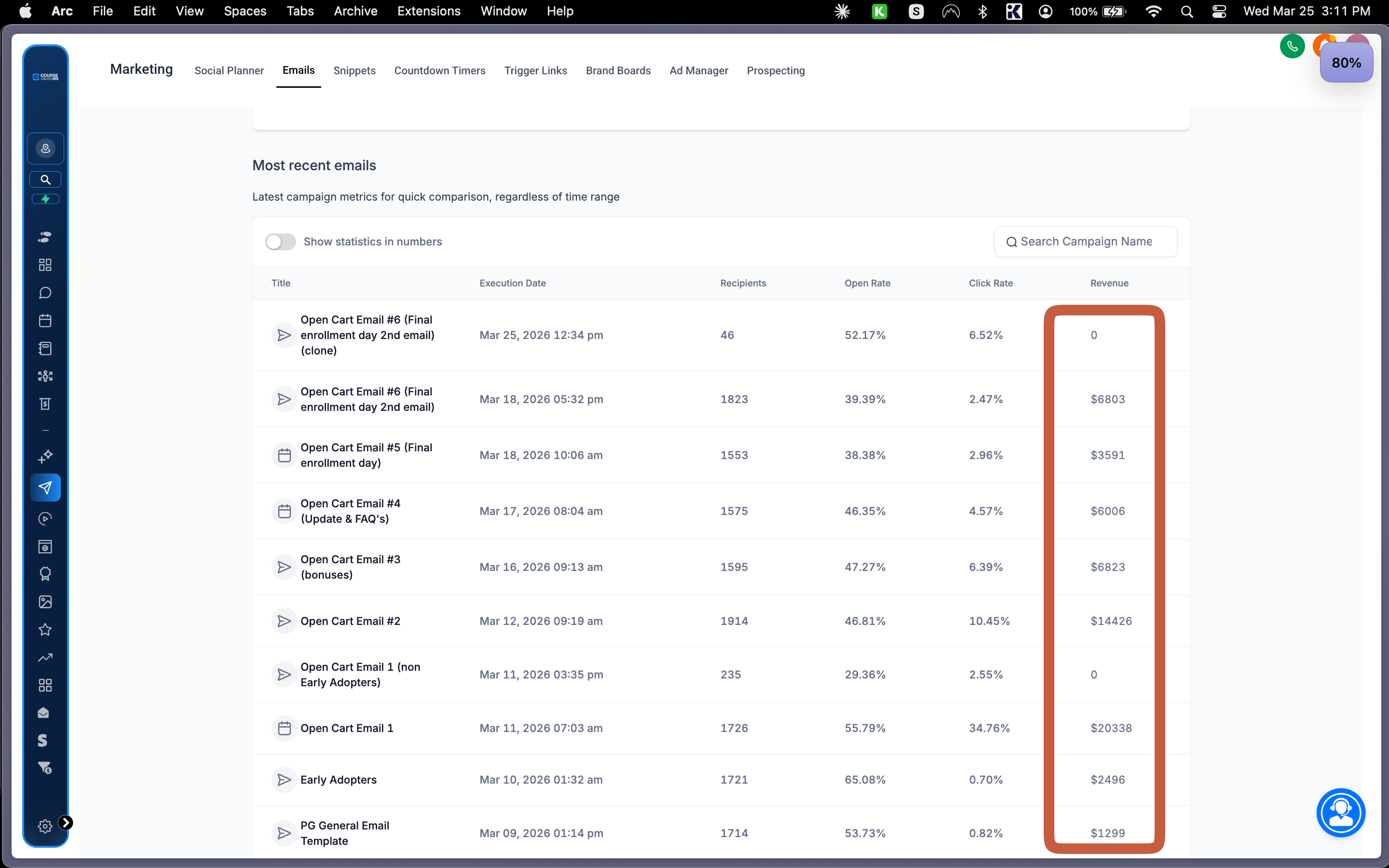
Email campaign dashboard — CC360. Every send, every open rate, every dollar tracked.
THE SITUATION
A 30,000-person list that barely moved.
Our client was a full-time content creator with a real business — a team, consistent output, and a weekly newsletter going out to over 30,000 subscribers. On paper, that's an asset. In practice, it was a liability masquerading as one.
The list had been built over years through passive accumulation. New video goes up, someone subscribes, they never hear anything purposeful from the brand again. Open rates hovered around 7–8%. Clicks barely cracked 1%. The list existed, but it wasn't engaged — and an unengaged list doesn't buy.
When it came time to launch their first-ever digital product, we had a decision to make: try to wake up a list of 30,000 strangers, or build a smaller, intentionally engaged one from scratch. We chose the latter.
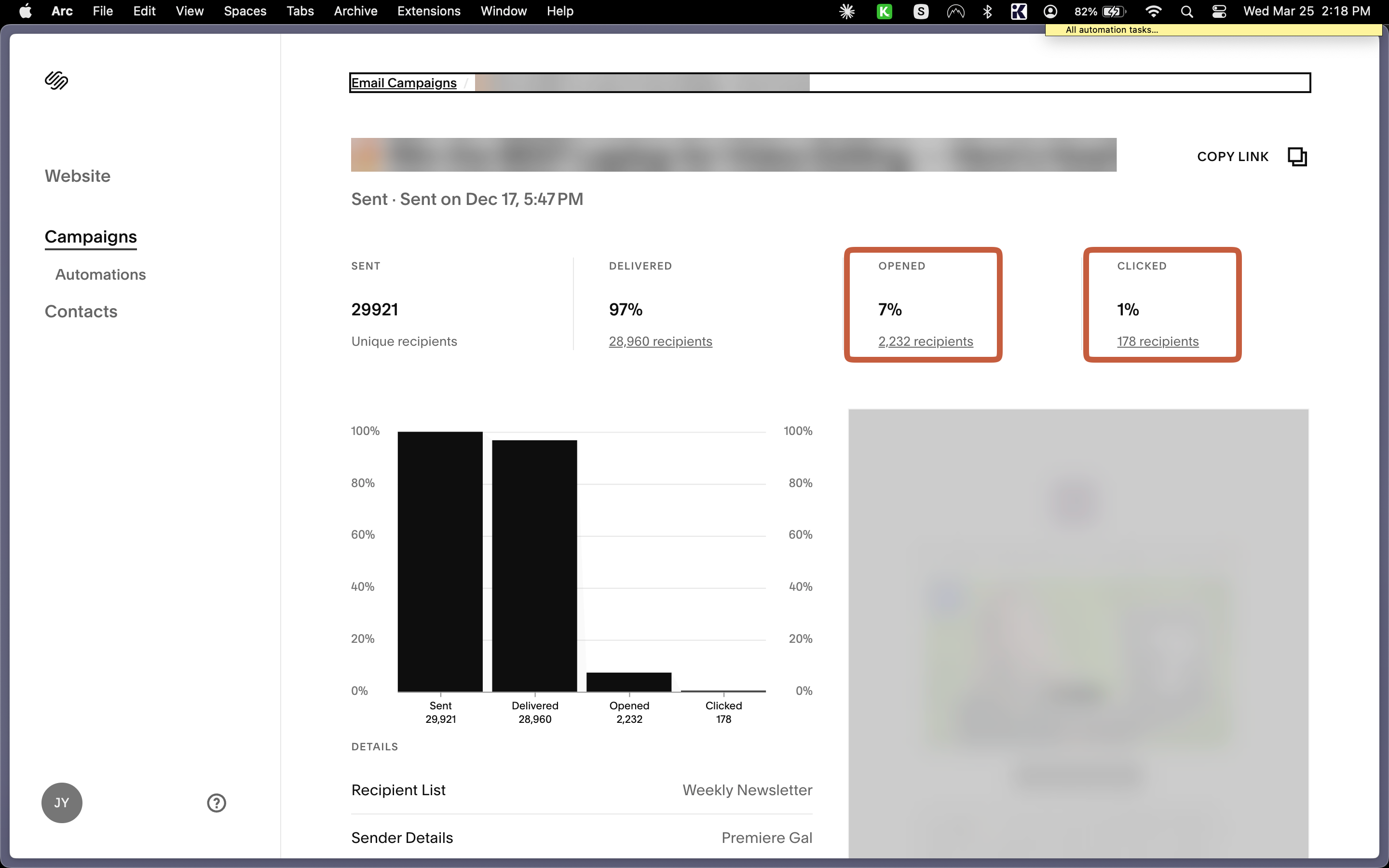
The existing list — 30,000+ subscribers, 7% open rate. Big numbers, quiet results.
EXISTING LIST
List size ~30,000
Open rate 7–8%
Click rate ~1%
Revenue attributed Low
Built over Years
PURPOSE-BUILT LAUNCH LIST
List size1,744
Open rate 38–65%
Click rate up to 34.76%
Revenue attributed $61,782
Spent on list building $0
"A list 17x smaller generated 70% of total launch revenue. The difference wasn't the size — it was the intent behind every subscriber."
— Jesse-Lee, Launch Strategist
HOW IT WORKED
Build a small list of people who actually want to buy.
Instead of blasting the cold 30k list and hoping for the best, we built a dedicated launch infrastructure — a purpose-built waitlist that attracted people who had already opted into the idea of buying. They raised their hand. They confirmed their subscription. They went through a nurture sequence designed specifically around the upcoming product.
By the time the cart opened, this wasn't a list of passive subscribers. It was an audience of buyers who had been warmed, educated, and were actively waiting. The automation workflows feeding this list achieved open rates as high as 88–95% — numbers that are essentially unheard of in mass email marketing.
The list wasn't built with ad spend or a lead gen campaign. It was built on content trust — the right people finding the right content at the right time and choosing to raise their hand.
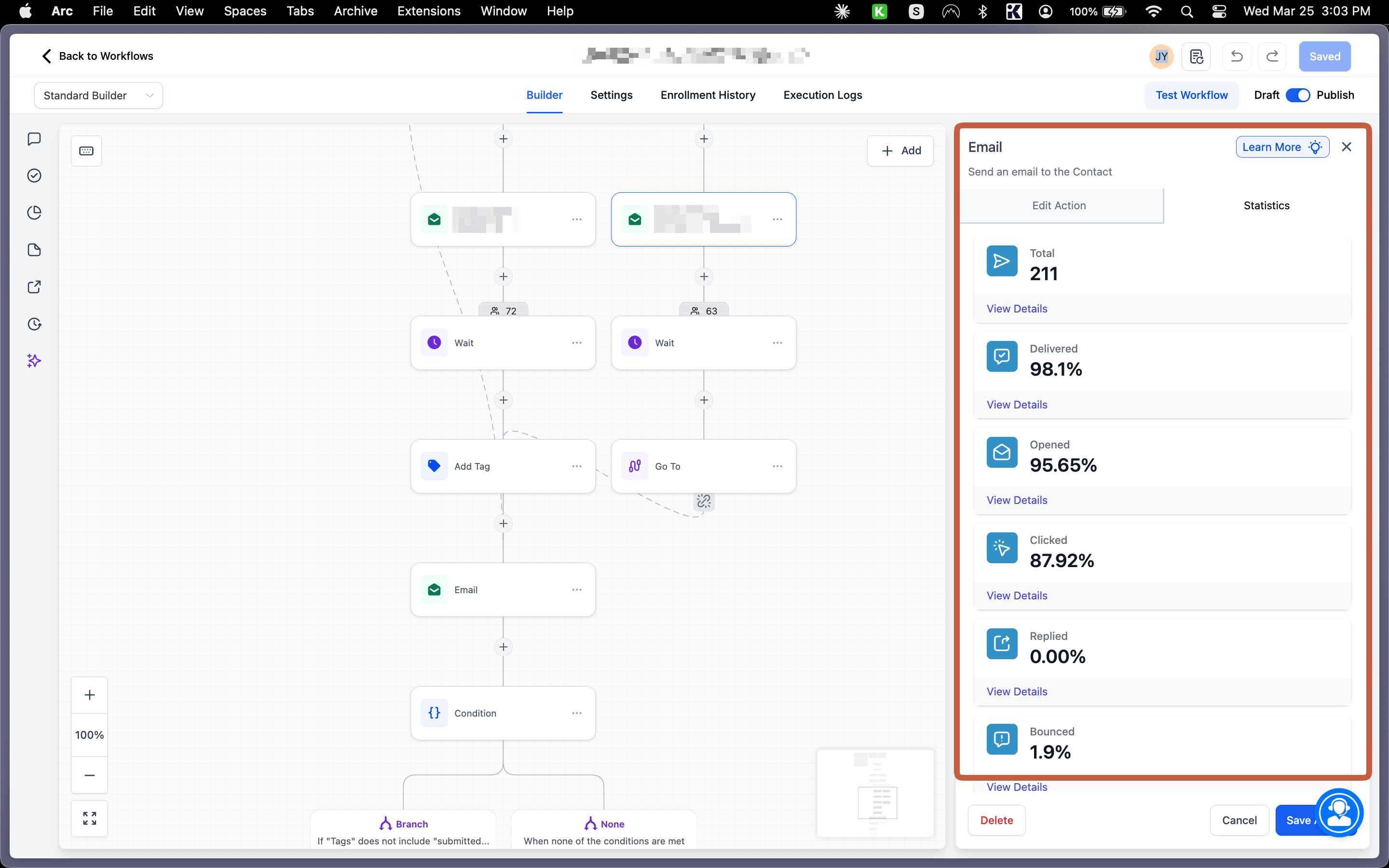
The waitlist automation workflow — open rates of 88–95%. This is what an engaged list looks like.
THE NUMBERS
Email by email, the revenue stacked up.
| Date | Open Rate | Click Rate | Revenue | |
|---|---|---|---|---|
| Pre-launch (general) | Mar 9 | 53.73% | 0.82% | $1,299 |
| Early adopters | Mar 10 | 65.08% | 0.70% | $2,496 |
| Open cart #1 | Mar 11 | 55.79% | 34.76% | $20,338 |
| Open cart #2 | Mar 12 | 46.81% | 10.45% | $14,426 |
| Open cart #3 (bonuses) | Mar 16 | 47.27% | 6.39% | $6,823 |
| Open cart #4 (FAQs) | Mar 17 | 46.35% | 4.57% | $6,006 |
| Final enrollment day | Mar 18 | 38.38% | 2.96% | $3,591 |
| Final day 2nd send | Mar 18 | 39.39% | 2.47% | $6,803 |
Total email-attributed revenue: $61,782 of $87,500 total launch revenue. No paid advertising. No traffic campaigns. All organic.
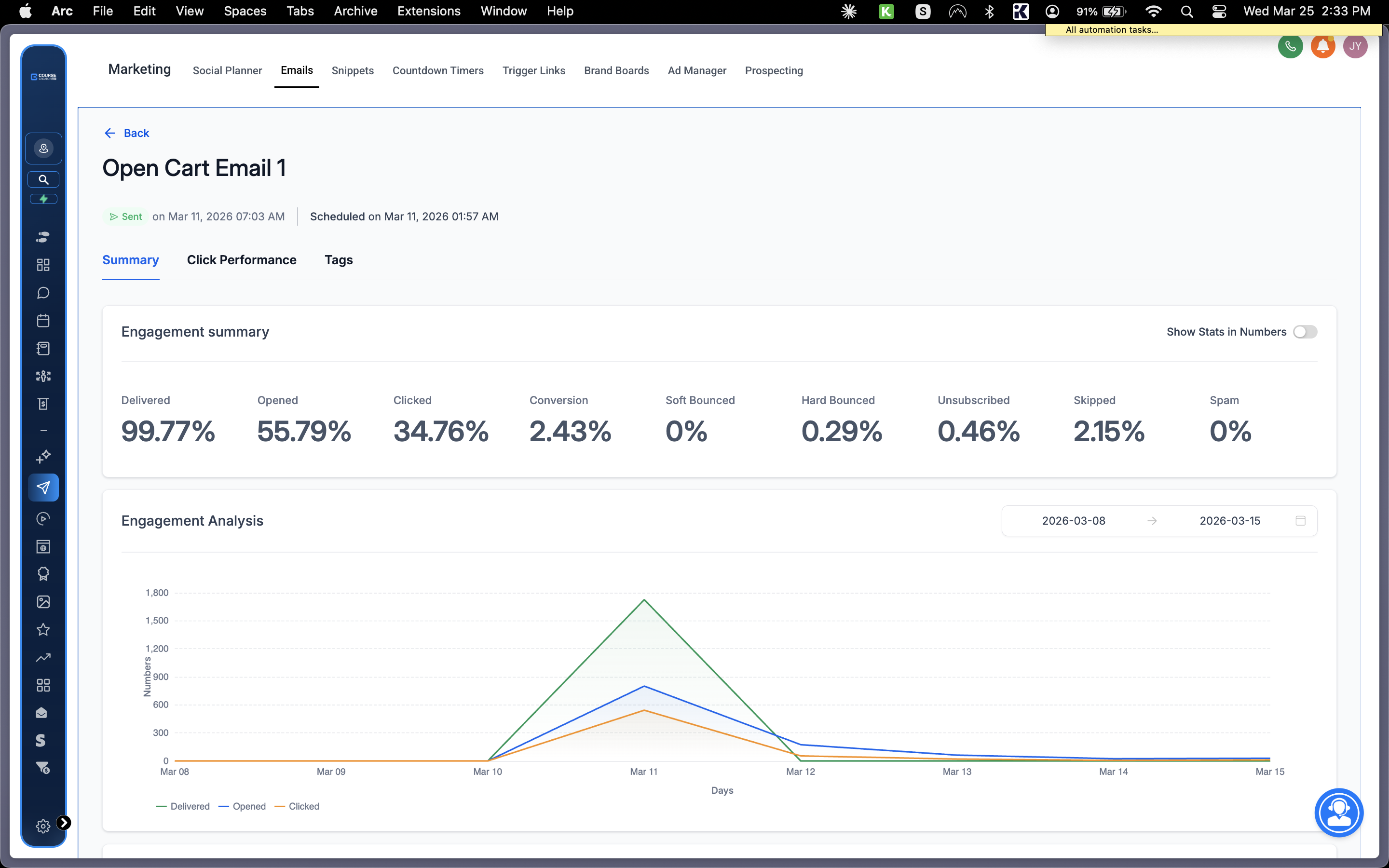
Open cart email #1 sent to 1744 contacts — 55.79% open rate, 34.76% click rate. The single highest-revenue email of the launch.
THE TAKEAWAY
What this means for your list.
Most businesses with an email list aren't failing at email. They're failing at list hygiene, list intent, and list architecture. The subscribers are there. The revenue potential is there. What's missing is a reason for those subscribers to care.
A 7% open rate on 30,000 people means 27,900 of your subscribers didn't open your last email. That's not a reach problem — it's a relationship problem.
If your conversion rate on the sales page stays exactly the same, but you double your opens and clicks, you double your revenue. Email engagement is a revenue multiplier.
A purpose-built list of 1,744 people — built intentionally around a specific offer — outperformed a 30,000-person passive list by every meaningful metric.
We build a list organically that generated $61,782. That's the ROI of building the right infrastructure before you launch.
Your list is probably worth more than you think.
Let's look at what you're sitting on — and what it would take to turn it into a revenue engine.